The West Blog

Blogs

Categories

Select a sub-category to view results

Icon
Films and Coatings
vail 4ml
Pharmaceutical Packaging Components
Icon
Prefillable Systems
Icon
Self Injection Devices
Icon
Vial Containment Solutions
Icon
Washing and Sterilization
Icon
Reconstitution and Transfer Devices

Select a sub-category to view results

Icon
Analytical Lab Services
Icon
Contract Manufacturing
Icon
Fill-Finish
Icon
Regulatory Support

Select a sub-category to view results

Icon
Cell and Gene Therapy Packaging
Icon
Drug Development Process
Icon
Regulatory Challenges
Icon
Transitioning to Combination Products

Select a sub-category to view results

Icon
Corporate Development
Icon
ESG/Sustainability
Icon
One West Team (Employee Culture)
Icon
Our Culture of Giving (Philanthropy)
Icon
Research and Development

Previous Blogs

(GLP-1) Glucagon-like peptide-1 Drugs for Diabetes Care

By Kok Li Kwang

December 19, 2025

The global pharmaceutical landscape is experiencing a major shift with the rapid rise of Glucagon-like peptide-1(GLP-1) drugs. Market projections estimate the value of this sector will reach $150 billion by 20301, underscoring the scale and significance of this innovation in medical care.

West team member Karin Bergstein featured in Volunteer Spotlight with family.

By Reese Brown

December 18, 2025

Inclusive environments actively cultivate space where everyone feels valued, respected, and empowered. For West team member Karin Bergstein, Executive Assistant, QA, EU & General Management, Germany, inclusion is a driving force behind her passion to volunteer. Karin’s daughter, Klara, lives with a genetic defect known as MAC F1. Currently, there are 10 children worldwide with this diagnosis. This genetic defect causes neuronal migration, which often results in developmental delays and cranial nerve deficits. Those that are affected by MAC F1 have impaired intellectual development which can cause poor speech and social deficits, making independent living difficult.

Close-up of vial adapter with syringe for drug preparation

By Katie Espenshade

December 10, 2025

As the healthcare landscape continuously evolves, the quest for safer, more efficient medical solutions remains a top priority for industry leaders. This involves leveraging cutting-edge technologies and innovative approaches to solve today’s healthcare challenges.

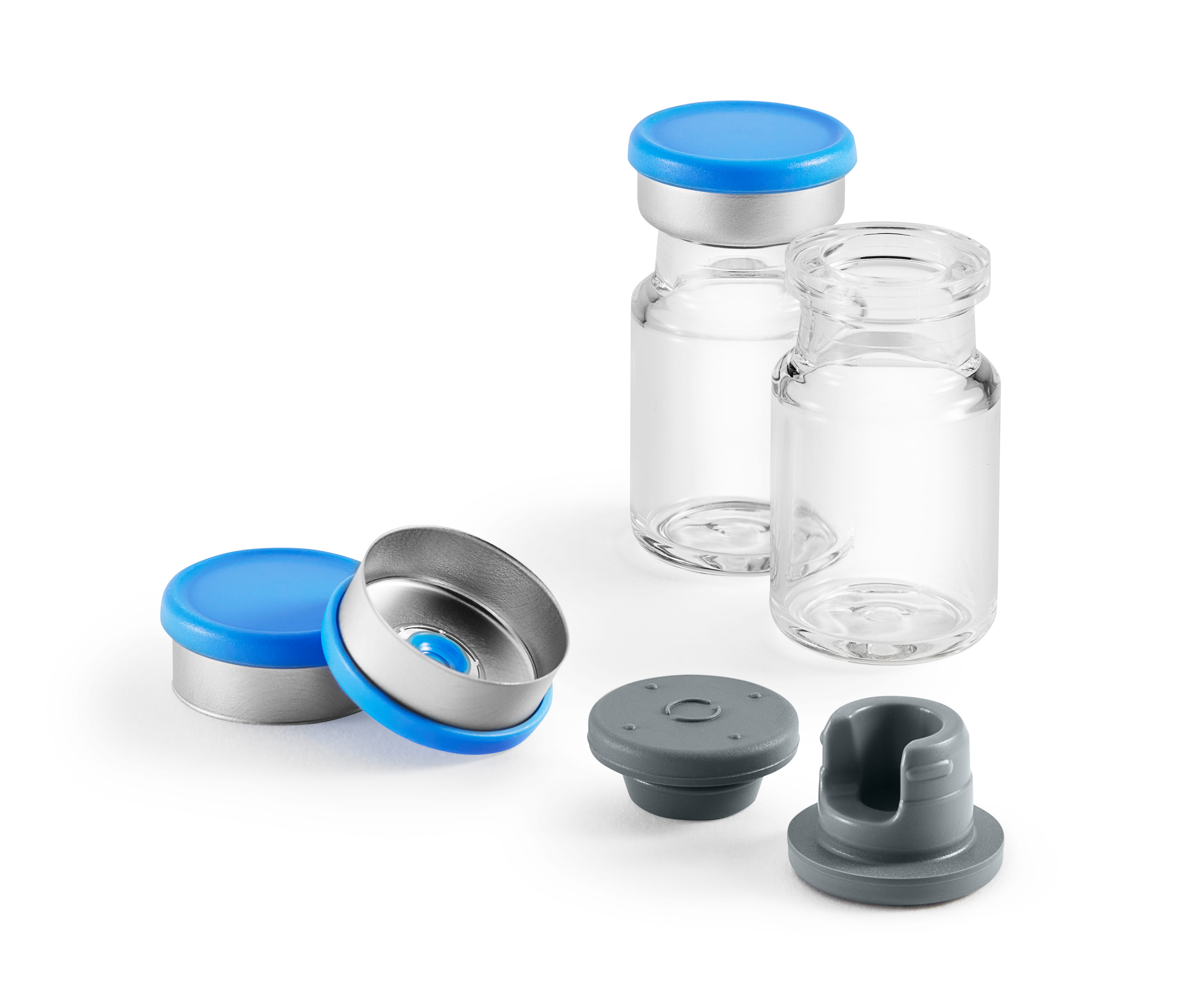
Glass vials with blue stoppers for parenteral drug packaging.

By Todd Jasinski

December 02, 2025

In December of 2025, United Stated Pharmacopoeia will make official the final version of USP <382> “Elastomeric Component Functional Suitability in Parenteral Product Packaging/Delivery Systems”, focusing on the functional testing of container closure systems. The tests in this chapter go beyond the current functional testing regimen in USP <381>, which is specific to the elastomeric component, the stopper, in a vial drug system. USP <382> broadens the scope of functional tests from only a stopper and vial to nearly all drug delivery systems. Additionally, drug manufacturers will typically need to perform the testing to show the functional suitability of the system, as the final configuration and use case will need to be known and established.

West scientist picking up container in the lab

By Prabhaharan Sankaran

November 26, 2025

Welcome back to our continued deep dive into packaging components. In Part 1, we explored key regulatory frameworks that shape packaging components in pharmaceuticals, such as USP <382> (effective from 01 Dec 2025), EU GMP Annex 1, and EU Medical Device Regulation (MDR) 2017/745. These guidelines underscore the importance of ensuring packaging components maintain drug integrity and safety, focusing on aspects like functional suitability, aseptic processing, and comprehensive compliance documentation.

 West Vial Adapter™ Transfer Devices in Cell and Gene Therapy Applications

By Katie Espenshade

November 20, 2025

The field of cell and gene therapies (CGT) is advancing rapidly, with an increasing number of therapies receiving approval for various conditions, ranging from rare genetic disorders to more common diseases like cancer. As the scope of treatable conditions widens, there is a parallel demand for advanced drug delivery systems that ensure these therapies are administered safely and effectively.